
The following guide outlines the critical diagnostic steps facility managers and operations teams should perform to ensure efficient communication and potentially avoid unnecessary downtime when seeking professional air compressor repairs.
Understanding the Importance of Preliminary Diagnostics
When a compressed air system fails, the immediate reaction is often to search for air compressor repairs near me to restore production as quickly as possible. However, providing an engineer with accurate preliminary data can significantly reduce the time required for diagnosis and repair. At DT Compressor Services, our team brings over 140 years of combined experience to every call-out, but even the most seasoned experts benefit from high-quality information provided by the site manager. By performing a few basic checks, you can determine whether the issue requires an emergency intervention or if it is a localized fault that can be addressed through standard maintenance.
1. Identify the Exact Make, Model, and Serial Number
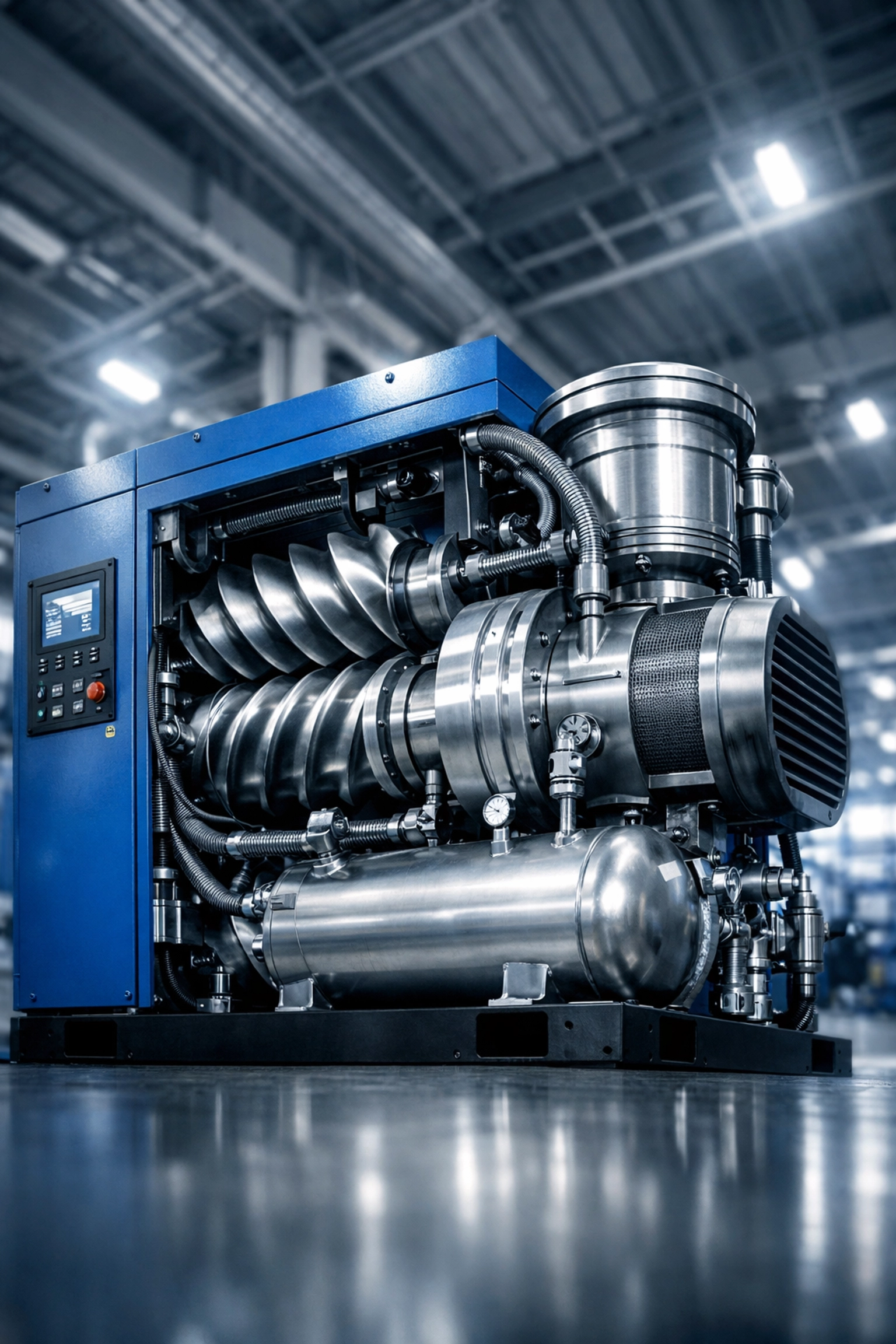
Accurate identification of your equipment is the most critical step in facilitating a swift repair. Before contacting a service provider, locate the data plate on the compressor housing to record the manufacturer, model number, and year of manufacture. This information is essential because parts compatibility varies significantly across different brands and even between different iterations of the same model.
Providing these details allows the service coordinator to check parts availability immediately. Whether you are using specialized Boge compressors or another major industrial brand, having the serial number ready ensures the engineer arrives with the correct filters, valves, or electronic components. Because DT Compressor Services provides air compressors service for all makes and models, this initial data helps us streamline our logistics to get your system back online faster.
2. Verify Power Supply and Control Panel Status
A significant percentage of "breakdown" calls are related to simple electrical interruptions rather than mechanical failure. It is important to note that industrial compressors are equipped with various safety shut-offs that can trigger a full system halt to protect the motor and screw element. Before searching for compressor repairs near me, verify that the main isolator is in the 'on' position and check the facility’s distribution board for tripped breakers or blown fuses.
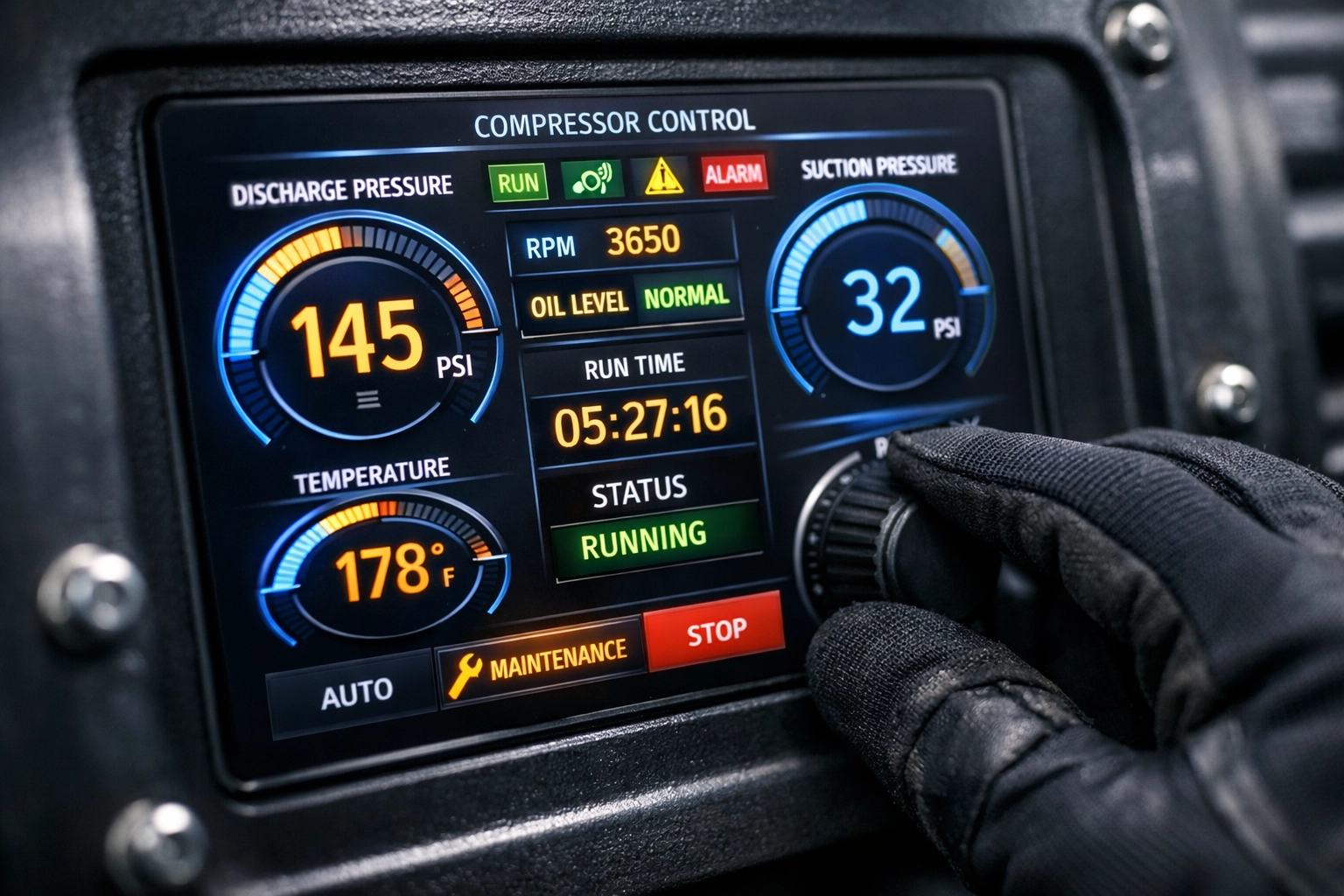
Inspect the compressor’s control panel for specific error codes or "E-stop" (Emergency Stop) activations. Often, an E-stop button may have been accidentally depressed by staff or during a shift change, preventing the machine from restarting. If the screen displays a specific fault code, such as "High Discharge Temperature" or "Motor Overload," record this code precisely. Relaying this code to the engineer allows for a remote diagnosis that can often pinpoint the failed component: such as a faulty thermostatic valve or a failing contactor: before they even leave the workshop.
3. Observe and Document Physical Symptoms
Detailed observations of the machine’s behavior prior to and during the fault can expedite the repair process. If the compressor is still operational but performing poorly, listen for unusual mechanical noises such as grinding, squealing, or excessive vibration. These symptoms often indicate bearing wear or belt slippage, which require immediate attention to prevent catastrophic failure.
It is also vital to check for visible leaks, including oil pooling beneath the unit or audible air leaks within the internal pipework. High temperatures are another common cause of system shutdowns; check if the cooling fans are rotating and if the oil coolers are obstructed by dust or debris. Providing a description of these physical symptoms helps the technician prepare for a "first-time fix," which is a hallmark of the professional services provided by DT Compressor Services.
4. Evaluate the Condition of Consumables and Drains
Neglected maintenance of filters and condensate drains is a leading cause of perceived system breakdowns. Before calling for an engineer, inspect the air intake filters to see if they are heavily saturated with dust. A blocked intake filter forces the compressor to work harder, leading to overheating and reduced CFM (Cubic Feet per Minute) output, which may appear to the operator as a mechanical fault.
Furthermore, check the functionality of the automatic condensate drains and the oil-water separator. If moisture is carrying over into the air lines, it may indicate a failure in the dryer or a blocked drain rather than a fault with the compressor itself. Managing these basic elements is a key part of maintaining system efficiency and avoiding the disadvantages of an over-sized or poorly maintained compressor. If these areas are neglected, the resulting pressure drops can trigger system-wide alarms that require professional resetting.
5. Review Service History and Warranty Status
Understanding the maintenance timeline of your equipment helps the engineer differentiate between wear-and-tear and an isolated component failure. Check your records to see when the last efficiency audit or comprehensive service was performed. If a machine is overdue for its 2,000-hour or 8,000-hour service, the current fault is likely a result of exhausted consumables or aged lubricants.
Additionally, knowing your warranty status can save significant costs. For those utilizing high-end equipment like the Boge S40-2, there may be manufacturer-specific warranty requirements that dictate how repairs must be handled. Providing this history to your service provider ensures that all work remains compliant with safety standards and insurance requirements, such as PSSR (Pressure Systems Safety Regulations) inspections.
Why Professional Expertise Matters
While the checks listed above can prevent unnecessary call-outs, industrial compressed air systems are complex and potentially dangerous. High-pressure air and high-voltage electrical components require specialist handling. DT Compressor Services offers a 24/7 emergency repair availability to ensure that when a genuine breakdown occurs, downtime is kept to an absolute minimum.
Our team’s 140+ years of combined experience allows us to diagnose issues across a vast array of technologies, from legacy piston units to modern Variable Speed Drive (VSD) screw compressors. We pride ourselves on a high-quality installation and repair standard, even when dealing with temporary or urgent installs. By choosing a partner that understands the nuances of energy-saving air systems, you ensure that your repairs not only fix the immediate problem but also contribute to the long-term reliability of your plant.

The Value of Local Expertise in Air Compressor Repairs
When searching for air compressor repairs near me, proximity is a factor, but expertise is the priority. A local provider who understands the specific industrial demands of the region can respond faster and bring the necessary tools tailored to local industry standards. DT Compressor Services has expanded its reach significantly, including the acquisition of Leicester Compressor Services, to ensure that we can provide rapid response times across a wider geographical area.
Whether you are facing a total system halt or a minor drop in performance, having a trusted partner who can provide an air compressors service backed by decades of technical knowledge is invaluable. From initial design to emergency repairs, the goal is always to maintain an optimal balance between performance, safety, and energy efficiency.
Summary Checklist for Facility Managers
To summarize, before you pick up the phone to request an engineer, ensure you have completed the following:
- Documentation: Have the make, model, and serial number ready.
- Power Check: Confirm the isolator is on and the E-stop is released.
- Fault Codes: Record any specific alphanumeric codes from the control panel.
- Environment: Note any leaks, strange noises, or high ambient temperatures.
- History: Determine when the unit was last serviced and if it is under warranty.
Taking these five steps will ensure that when you do call for compressor repairs near me, the technician is fully equipped to resolve the issue on the first visit, saving your business time and money.
Notes and Disclaimer:
The information provided in this article is intended for educational purposes and to assist in preliminary troubleshooting. Compressed air systems involve high pressure and high voltage; therefore, internal repairs or electrical testing should only be performed by qualified professionals. Always refer to your manufacturer’s manual for specific safety protocols. Configurations and requirements may vary based on your specific industrial application and local regulations.